-

-

+86-0576-86655111
-

Wenling , Zhejiang, China
+86-0576-86655111
Wenling , Zhejiang, China

Industry News
 Home / News / Industry News / What Should Contractors Look for in a Battery Pipe Plumbing Tool for Modern Jobsites?
  2026.09.04
 Industry News
As plumbing projects become more mobile and installation environments become increasingly confined, contractors are paying closer attention to how tools affect workflow, operator fatigue, and connection consistency. Current product discussions increasingly focus on cordless operation, battery compatibility, compact handling, interchangeable accessories, and reliable performance rather than power alone. For installers working in residential renovation, commercial construction, maintenance, and mechanical rooms, choosing the right Battery Pipe Plumbing Tool can make routine pipe work easier to manage while reducing dependence on fixed power sources.
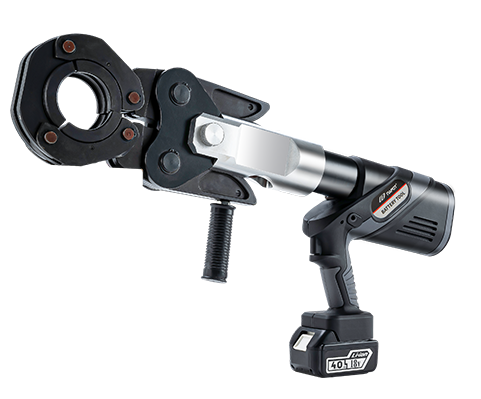
A major advantage of battery-powered plumbing equipment is freedom of movement. Installers may need to work inside cabinets, ceiling spaces, crawl spaces, plant rooms, or partially completed buildings where access to mains power is inconvenient. Current cordless press tools commonly use rechargeable battery platforms and are designed around portable operation.
For purchasing teams, this means the evaluation should go beyond battery capacity. A practical assessment should include:
These details can have a direct effect on everyday usability.
Not every plumbing tool is suitable for every connection method. Depending on the project, installers may work with copper, stainless steel, PEX, multilayer pipe, or other approved systems. Current cordless press-tool ranges reflect this variety, with different jaws and operating capacities designed for specific pipe materials and dimensions.
Procurement teams should therefore confirm the complete application range before ordering. A suitable tool should match the fitting system, pipe outside diameter, required pressing profile, and applicable installation procedure. Buying a tool based only on its headline specifications can create compatibility problems later.
For professional plumbing work, repeatability is often more important than simply achieving high mechanical output. A battery-powered pipe press tool needs to deliver controlled force throughout the pressing cycle so that properly prepared fittings can be joined according to the relevant system requirements.
Modern professional models are increasingly incorporating pressure monitoring, automatic retraction, status indicators, and other control features. These functions can help operators identify incomplete cycles and improve consistency between individual connections. For OEM buyers, these are also important considerations when developing tools for contractors who expect predictable operation across repeated jobs.
Tool design becomes particularly important when plumbing work involves repeated overhead or awkward-position operations. A tool that is difficult to hold or poorly balanced may increase operator fatigue even when its technical performance is adequate.
Manufacturers are therefore paying more attention to compact structures, rotating heads, balanced weight distribution, and easier controls. Recent cordless press-tool designs, for example, include rotating heads to improve access in different installation positions. When evaluating a cordless plumbing pipe tool, buyers should consider how easily an installer can position, trigger, and remove the tool during a full working day.
For distributors and professional tool brands, the tool itself is only part of the purchasing decision. Battery availability, chargers, jaws, rings, replacement parts, and technical support can affect the long-term value of a product line.
Interchangeable jaws are particularly useful when one tool must serve multiple pipe applications. Some current systems offer multiple jaw or ring options, allowing contractors to configure the same press platform for different installation requirements. OEM buyers should establish accessory compatibility and replacement support before finalizing a product specification.
From a manufacturing perspective, effective approach is to define the working environment and then develop the tool around it. Instead of focusing on one specification, manufacturers should evaluate the complete operating chain: battery system, drive mechanism, pressing force, control method, jaw compatibility, ergonomics, and serviceability.
This approach helps distributors and engineering teams create a battery-powered plumbing tool that fits actual installation requirements rather than simply adding features for marketing purposes. It also provides a clearer basis for OEM customization, testing, and long-term product development.
As cordless technology continues to influence professional plumbing equipment, buyers are increasingly looking for practical combinations of mobility, controlled operation, compatibility, and service support. A well-designed Battery Pipe Plumbing Tool can address these needs while giving contractors greater flexibility across different installation environments.
Recommended Products
Copyright © Taizhou Naibo Machinery Co., Ltd. All Rights Reserved.

Cable Wire Cutting Tool Manufacturer
 English
 Español
 русский
 Français
 Deutsch
 Português